Introduction:
Stories matter. They shape us. They comfort us. Sometimes they even save us.
But lately, I’ve noticed a weird trend—especially among post-faith thinkers who still want to keep one foot in the church door. The Bible, stripped of literal belief, gets rebranded as the ultimate Jungian roadmap to the human soul.
The metaphors get thicker. The symbolism gets deeper. Suddenly, Cain isn’t just a guy who killed his brother—he’s the embodiment of resentment, shadow, exile, original sin, and probably your dad issues. And I get it. I’ve done the same thing.
But here’s the thing: sometimes a story is just a story. And if we’re not careful, trying to make everything “deep” can actually stop us from seeing what’s true.
Meaning Isn’t Magic
When I lost my siblings, I went looking for something—some deeper meaning to help me understand grief, death, and the bewildering fragility of human existence. The Bible remained on my desk for months, collecting dust, its leather-bound spine a constant reminder of unanswered questions. Not because I had stopped believing in its power—but because I was terrified of opening it and discovering that I might not believe anymore.
Eventually, after weeks of internal struggle, I cracked it open. And when I finally read it—really read it, with fresh eyes and an open heart—I discovered scattered fragments of profound beauty buried within its pages... but I also encountered a labyrinth of contradictions, unsettling violence, and bizarrely detailed regulations about everything from menstrual cycles to the proper handling of sacrificial goats. Yet whenever I voiced my confusion or discomfort, the response was always the same practiced dismissal: "Yeah, but it's symbolic."
Okay—but symbolic of what?
The Symbolism Trap
There's a whole cottage industry of thinkers who treat ancient texts like mystical decoder rings. Every animal, every number, every detail becomes a cosmic truth waiting to be unlocked. Snake = chaos. Garden = womb. Flood = rebirth. Three = divine perfection. Seven = completion. Forty = transformation. Cool story, bro.
But this symbolism trap has three layers, each more seductive than the last:
First, there's the pattern-matching game. Once you start seeing symbols everywhere, your brain gets hooked on finding more. Everything becomes significant. That random dream about bread? Must be eucharistic imagery. Your coffee spilled in a weird shape? Clearly a sign from the universe. The human mind is excellent at finding patterns—even where none exist.
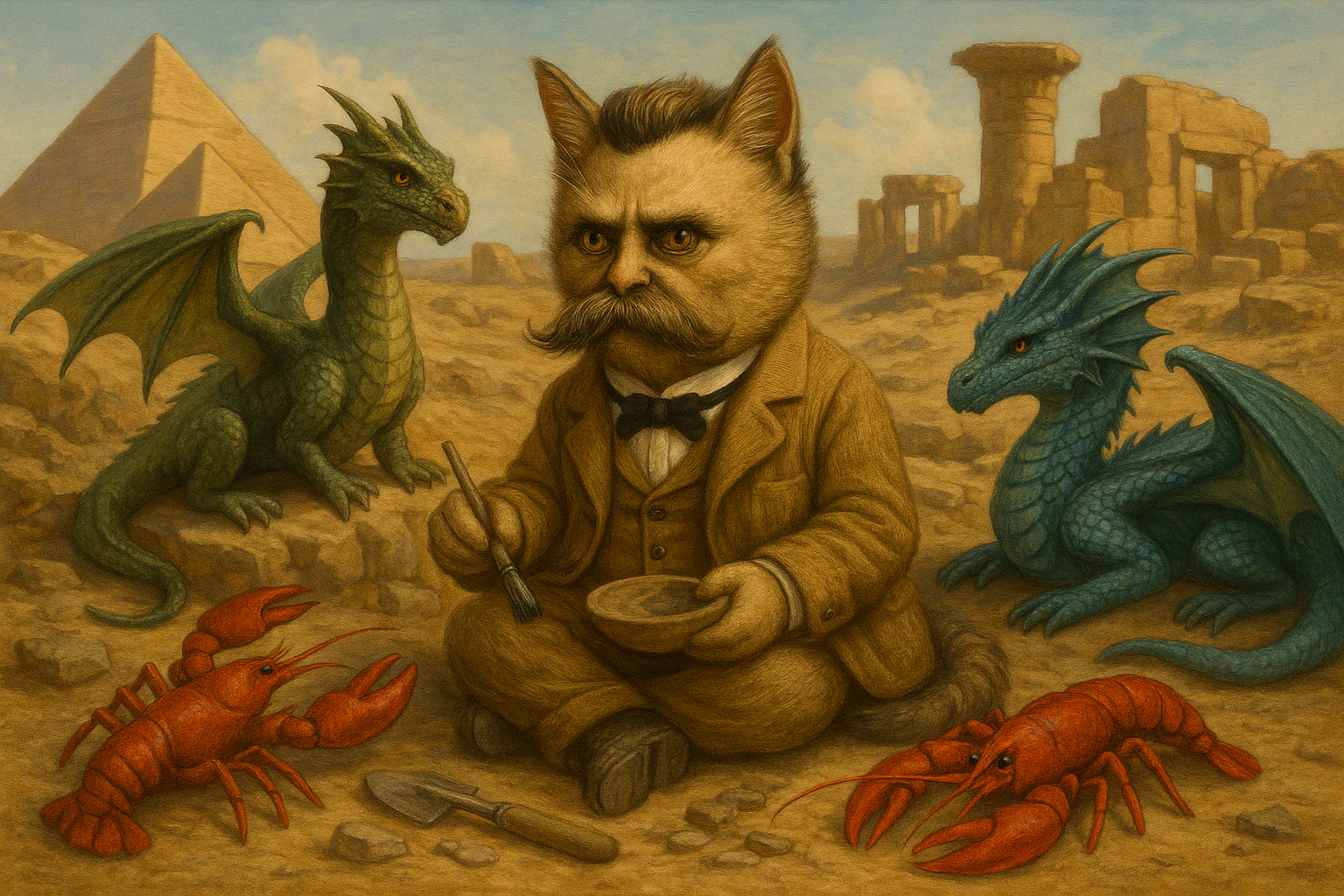
Second, there's the depth addiction. Regular interpretations start feeling shallow. Why accept that a story about brotherly rivalry is just about... brotherly rivalry? No, it must be about the eternal dance between order and chaos, the shadow self, the collective unconscious, and probably something about lobsters. The deeper the interpretation, the more "profound" it feels—and the further we drift from simple truth.
Finally, there's the moral escape hatch. When we turn everything into metaphor, we never have to confront difficult realities. Uncomfortable with divine commands to slaughter children? Don't worry—it's just a metaphor for killing your ego! Troubled by biblical slavery? Relax, it's an allegory about spiritual bondage! This symbolic shell game lets us dodge moral responsibility while pretending to engage deeply with the text.
But at some point, you have to ask: are we seeing meaning, or are we projecting it? Are we discovering truth, or just playing an elaborate game of make-believe?
Not everything old is profound. Not every coincidence is significant. Not every detail needs decoding. Sometimes the serpent is just a snake. Sometimes the genocide is... well, just genocide. And pretending otherwise doesn't make us wise—it makes us complicit in a comfortable delusion.
Why This Matters
Because the danger of over-interpretation isn't just academic—it's moral. And it creates a convenient trap: if some parts of scripture are clearly symbolic (like parables), and other parts are clearly literal (like genealogies), who decides which is which? Too often, the answer becomes "whatever makes me most comfortable."
I've seen people twist horrific verses into metaphors just to avoid saying, "Yeah, that's messed up." They'll accept the literal truth of Jesus's birth narrative but insist that divine commands for genocide must be symbolic.
Slavery? "Cultural context."
Rape laws? "Different time."
Infanticide? "Symbolic justice."
No. At a certain point, bending over backward to justify these stories isn't wise—it's dishonest. If we claim the Bible is morally instructive, then we have to be willing to face the parts that are morally indefensible. We can't keep playing this game where everything beautiful is literal and everything ugly is "just a metaphor."
You Can Learn Without Kneeling
I still find value in ancient myths. I love the idea of meaning emerging from narrative. But I refuse to pretend these stories are sacred blueprints for reality just because they’re old, popular, or emotionally resonant.
I’ve done the “it’s not religion, it’s a spiritual journey” phase. I went deep into Jung. I watched the full Peterson lectures. I journaled about archetypes and shadow work and cosmic order like I was decoding the Matrix with incense burning in the background. And for a while, it felt profound—like I was salvaging truth from the wreckage of dogma.
But eventually, I started asking the same questions I once asked about Christianity: Is this actually true, or just another poetic framework that makes life feel more coherent?
We can appreciate the poetry of the flood story without pretending it holds the secrets to quantum physics or parenting advice. We can talk about Jesus’s parables without claiming they’re divine truth wrapped in riddle. And we can absolutely respect myth without putting it on a pedestal above every other cultural story our ancestors told.
The moment we stop questioning meaning and start worshiping it, we’re not seekers anymore—we’re apologists in disguise.
Notes & Influences
This post is shaped by years of wrestling with faith, myth, and the psychological aftershocks of deconstruction. Although these thoughts are my own, built from over a decade of research and reading, the following thinkers have helped me sharpen my view—some I agree with, some I don’t—include Jordan Peterson, Jonathan Pageau, Sam Harris, Matt Dillahunty, Justin from Deconstruction Zone, Carl Jung, Friedrich Nietzsche, and Michele Montaigne, to name just a few.
← Back to the blog