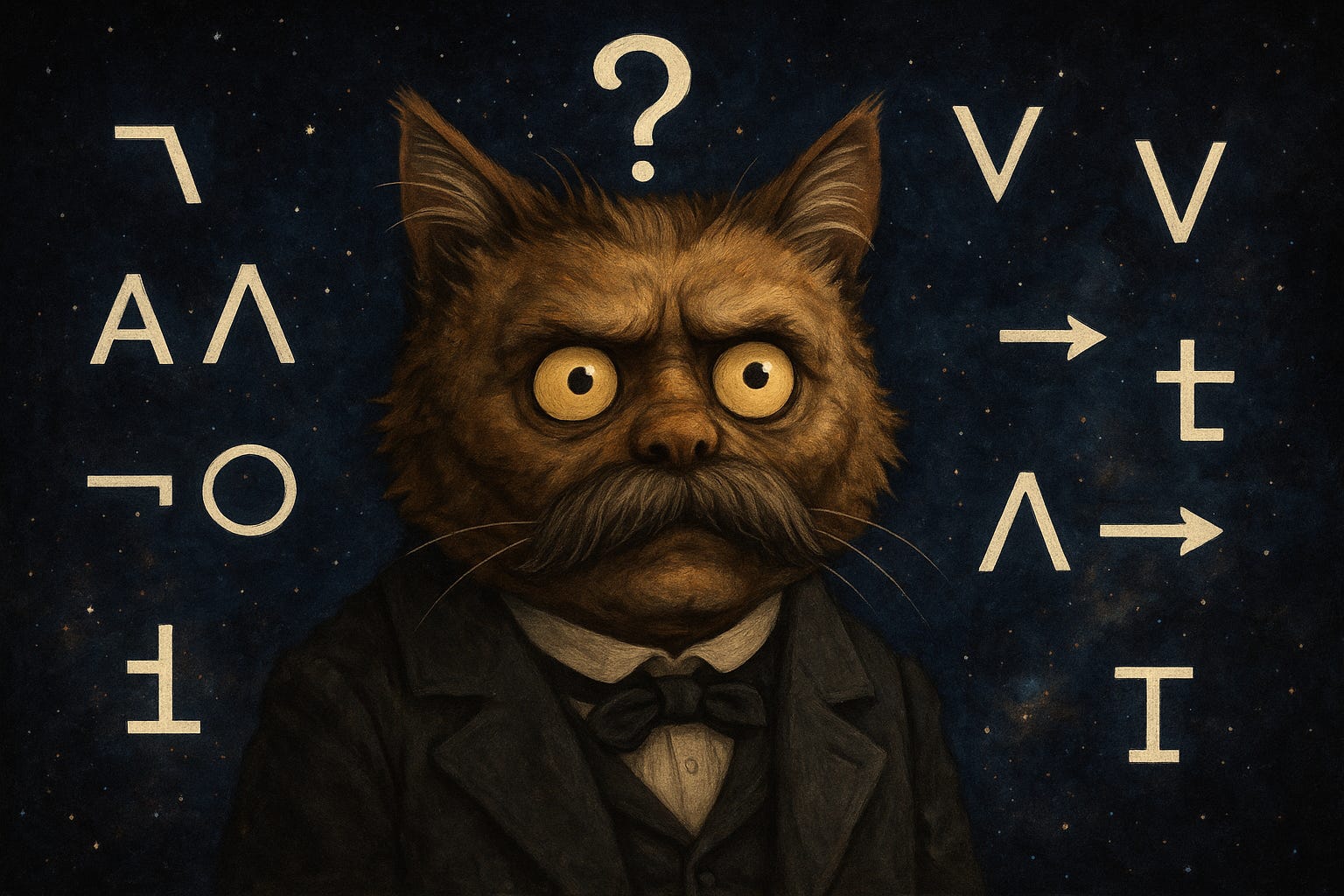
Let’s set the record straight: skepticism is not synonymous with conspiracy theories. If you think being skeptical just means distrusting authority or yelling “Do your own research!” into the algorithmic void until you find a YouTuber who agrees with your gut, you’re not practicing skepticism, you’re roleplaying as someone who is.
Real skepticism, the kind that David Hume bled into paper centuries ago, isn’t about cynicism or contrarianism. It’s a mental discipline. It’s the willingness to constantly audit your beliefs, even the comfortable ones. Especially the comfortable ones. It's brutal, it's humbling, and it's one of the few things that can keep your brain from turning into a belief hoarder’s junk drawer.
Humean Skepticism: Betting, Not Believing
David Hume didn’t argue that knowledge is impossible, he just wanted us to stop bullshitting ourselves about how certain we are. His “problem of induction” boils down to this: just because something happened yesterday, and the day before that, and a thousand days before that, doesn’t guarantee it’ll happen tomorrow. The sun rising, the apple falling, the toast landing butter-side down, these aren’t certainties. They’re patterns we’ve come to expect.
So what do we do with that? Hume’s answer was simple but powerful: proportion your belief to the evidence. You don’t know the sun will rise tomorrow, you just think it’s extremely likely based on past observation. And that’s fine. That’s how we navigate the world. But you don’t get to call it knowledge unless it’s earned.
You start to see belief as a bet, not a declaration. The stronger the evidence, the higher your confidence. The weaker the evidence, the more agnostic you should be. And if you find yourself saying “I just feel like it’s true,” take a breath. You might be chasing familiarity, not truth.
The Laws of Logic: The Bedrock of Knowing
Now here’s where people start to flinch. The second you say "logic," most folks tune out like you're about to write on a whiteboard and put on a monocle. But this isn't nerd shit (well it kind of is 😂), this is reality 101.
If you want to claim something is true, it needs to work within the basic laws of logic:
Law of Identity: A thing is what it is.
Law of Non-Contradiction: A thing cannot be both itself and its opposite in the same way at the same time.
Law of Excluded Middle: A claim is either true or not true—there is no ghost zone in between.
If your belief violates any of those, it’s not just wrong, it’s meaningless. That’s not an insult, it’s a category error. You're not playing the game anymore. And if your belief isn’t falsifiable—if there’s no way, even in principle, to prove it wrong—then you’re not in the realm of knowledge. You’re in the realm of untestable faith.
Which, cool, believe what you want. But don’t confuse vibes for verification. Whether or not logic is baked into the fabric of the universe or something our rational brains created, this is the only way for us to KNOW something it TRUE.
Falsifiability: Science’s Bullshit Filter
Karl Popper, a 20th-century philosopher of science, didn’t just refine skepticism, he weaponized it. He realized that what separates science from pseudoscience isn’t what we believe, but whether we’re willing to test those beliefs and risk being wrong.
Popper’s big contribution was giving us a filter: you don’t prove ideas true, you try to break them. If they survive, great. If they don’t, good riddance. That’s how science works.
This is why the whole “you can’t prove it false, so it might be true” move doesn’t fly. That’s how Bigfoot, homeopathy, and anti-vax rhetoric all slither in. If your idea can’t even be imagined as wrong, it’s not an idea—it’s dogma in a lab coat.
“Extraordinary claims require extraordinary evidence” isn’t intellectual snobbery, it’s protection against self-deception. Your brain is a narrative machine with a drug addiction for certainty. Falsifiability is how you prevent overdosing on bullshit.
Skepticism vs. Conspiracy Thinking
Let’s call this one what it is: a lot of people deconstruct from religion, only to reconstruct around a new dogma. They swap out God for QAnon, or Big Pharma paranoia, or ayahuasca-fueled mysticism. And then they say they’re skeptics.
Fuck that.
They’ve just replaced one unquestionable framework with another. They’ve upgraded the hymnal to a podcast feed. And they’re often more insufferable about it, because they think they’ve seen through the matrix.
Skepticism asks for evidence and welcomes critique.
Conspiracy thinking starts with a conclusion and reverse-engineers the “facts.”
The irony is thick: people walk out of the church and head straight into another cult, except this one has memes and a Patreon. That’s not freedom. That’s just dogma.
Real skepticism is slower, lonelier, and way less satisfying in the short term. But it's the only way to build beliefs that won’t collapse under scrutiny, or worse, trap you in another illusion.
My Process for Finding Truth (and Not Fooling Myself)
Credit where credit’s due—this framework is something I first heard from Matt Dillahunty, and it’s become one of my most valuable mental tools. Here’s the checklist I run through anytime someone makes a bold claim (or, more often, when I do):
Do I already want this to be true?
Is it consistent with everything else I think is true?
If I accepted this, what would I have to give up?
How would this affect my life practically?
Is there good evidence against this that I’m ignoring?
Who’s telling me this, and what might they gain from my belief?
This isn’t a perfect system. But it’s a hell of a lot better than “trust your gut,” especially when your gut has been marinating in bias and cultural programming for 30+ years.
Also, a quick side note for the phil-bro who tries to derail every conversation with “What if none of this is real?”—hard solipsism is a mental escape hatch. If you only bring it up when you’re losing the argument, you’re not being deep. You’re being slippery and it is an obvious characteristic of a dishonest interlocutor.
Logic Isn’t Just for Nerds, It’s for Not Being a Sucker
If you don’t know basic logic, it’s obvious. You confuse correlation with causation. You fall for false dilemmas and slippery slopes. You think “I heard it from a guy who’s done his own research” counts as peer review.
Studying logic isn’t about being right, it’s about not being so goddamn easy to fool.
And yeah, that means you might have to sit with discomfort. It means you might realize half the things you argue about online are based on sloppy reasoning. It means you might have to admit you’re not going to see your dead siblings in heaven. But it also means you get better at smelling bullshit… your own included.
And that? That’s a superpower.
Belief Is a Feeling; That Doesn’t Make It True
This is where neuroscience catches up to Hume. The part of your brain that processes threat, the posterior medial frontal cortex, lights up when your beliefs are challenged. It doesn’t feel like a philosophical disagreement. It feels like danger.
That’s why we dig in. That’s why people double down in the face of contrary evidence. Belief isn’t primarily a cognitive process. It’s emotional. It’s tribal. It’s bodily.
Hume saw this centuries before fMRIs. He wrote that belief is nothing more than a “vivid idea”—an internal sensation of confidence. Not a proof. Not a deduction. A feeling. And feelings can lie.
Understanding this doesn’t make belief disappear. But it makes it possible to question your beliefs without collapsing. Because you start to realize: your feelings about a belief aren’t the same thing as the belief being true.
*for more on this topic be sure to check out my last post titled “Why Belief Feels So Real—Even When It's Bullshit”
Final Thoughts: Your Beliefs Aren’t You
This might be the most liberating idea of all: you are not your beliefs.
You're the creature that holds them, not the beliefs themselves. They're not sacred. They're not static. They're habits of thought shaped by trauma, childhood, hormones, fear, joy, Netflix, whatever.
They can evolve. They should evolve.
This is why philosophy and logic matter so deeply. In a world where anti-intellectualism is celebrated and "thinking too hard" is somehow an insult, logic gives you armor. It teaches you not just what to think, but how to think. It's the difference between having opinions fed to you and being able to construct your own worldview brick by sturdy brick.
The tools of philosophy aren't academic luxuries, they're survival equipment for a mind bombarded by manipulation. When everyone's selling certainty, learning to embrace doubt becomes revolutionary.
And if you're not willing to challenge your own worldview as ruthlessly as you challenge someone else's, then you're not a skeptic, you're just another true believer in a different costume.
📚 Want more?
← Back to the blog