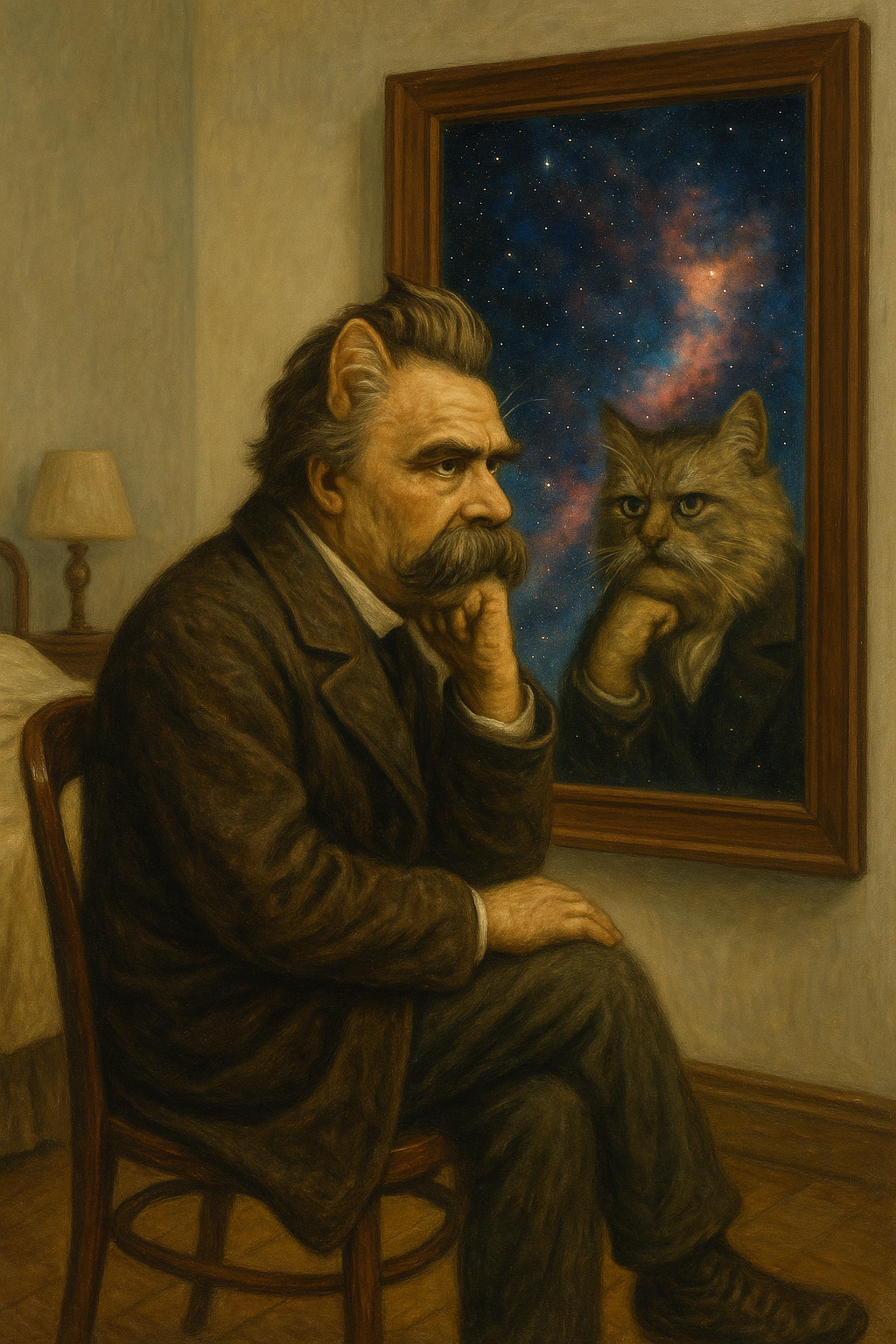
If you’re here, you probably know me as the guy who’s always asking questions—about myself, about the world, about why we do what we do. I’m not here to pretend I have all the answers. Honestly, most of the time it feels like the more I learn, the less I actually know. But if there’s one thing I can say for sure, it’s that introspection—actually sitting with yourself, questioning your beliefs, and trying to see your own bullshit—has changed the way I live, work, and relate to other people. So, here’s what I’ve learned (so far), and how I’m still figuring this shit out as I go.
The Never-Ending Project of Figuring Yourself Out
Let’s get one thing straight: introspection isn’t a destination. It’s a lifelong project, and sometimes it feels like chasing your own tail. I’ve spent years trying to “figure myself out,” only to realize that I’m constantly changing. There’s always another layer, another blind spot, another old story running in the background that I thought I’d already dealt with. I’ve learned that you have to negotiate with yourself, especially with the parts you don’t like. I can’t change my addictive personality, but I can use it for something positive. Routine and discipline help me channel that energy instead of letting it run wild. Self-awareness takes actual effort—it’s easy to get lost in whatever you’re doing and lose track of what’s really going on, both inside and out. Sometimes I joke that I’ve created a “self-observing monster” in myself, and honestly, I’m not sure it’s a joke.
Philosophy, Psychology, and the Art of Not Lying to Yourself
My introspection journey really kicked into high gear when I started digging into philosophy and psychology—Nietzsche, Jung, Freud, Carl Rogers, Adler, and more. I realized early on that if you don’t understand how your ego works, if you don’t see how culture, religion, and even language shape your thinking, you’re just going to keep repeating the same patterns. Jung’s idea of “shadow work” hit me hard—the stuff we don’t want to see in ourselves is exactly what we need to face. And Nietzsche’s warning about “gazing into the abyss” is no joke. You have to be careful not to become the thing you’re fighting against.
My epistemological framework combines scientific skepticism with physicalism—I want evidence for claims, none of this “faith” bull shit, but I also recognize that sometimes we need to act on incomplete information. The more I learn, the more I realize how much uncertainty exists in our knowledge. There's a hierarchy of understanding that I try to be mindful of: from raw data, to information, to knowledge, to wisdom. Following a recipe isn't the same as understanding why it works—the science, the history, the context. I try to remind myself that just because I know something doesn't mean I understand it, and vice versa. This approach helps me stay humble while still being confident enough to make decisions and move forward.
Tools and Practices: How I Actually Do the Work
So what does introspection look like in practice? For me, it’s a mix of structured and unstructured stuff. I do yearly reviews—looking back at who mattered, what experiences shaped me, and what patterns keep coming up. I ask myself tough questions about why certain people or moments mattered, what I actually value, and how I want to live moving forward.
Journaling and meditation are huge. Meditation isn’t about connecting to some mystical force for me—it’s about noticing what’s really going on in my head and body. I also lean into philosophical inquiry: thought experiments, playing devil’s advocate, and even using Socratic dialogue (either with myself or others) to stress-test my beliefs. I’ve learned to spot my own cognitive biases—confirmation bias, sunk cost fallacy, overconfidence—and call myself out when I’m falling for them.
Psychedelics have played a role too, especially in helping me see my projections and habits from the outside. But honestly, you don’t need drugs to get real with yourself—you just need to be willing to look at your own shit, even when it’s uncomfortable.
From Religion to Meaning-Making
A big part of my journey has been moving away from the religious beliefs I grew up with. I had to build my own values from scratch, which forced me to ask: What actually matters to me? What makes life meaningful? I’ve found that you don’t need a god or an ancient rulebook to know that less unnecessary suffering is better than more. I try to ground my morality in well-being—mine and others’—and I take responsibility for figuring out what that looks like, even if it’s messy and imperfect.
Leaving religion meant losing a built-in community, which sucked. But it also meant I had to be intentional about finding or building new communities around shared interests, personal growth, and honest conversation. I still don’t have tidy answers to the big questions—Why are we here? What does it all mean?—but I’ve learned to be okay with that. Part of the freedom is in learning to live with uncertainty and finding meaning in the search, not just the answers. I will most certainly have plenty more to say in the near future around morality and ethics, but for now I will things here.
Introspection at Work and in Relationships
Introspection isn’t just some solo project—it shows up in how I work and relate to others. I’ve learned the hard way that just being observant or self-aware doesn’t automatically make you a good communicator or leader. I’ve had to get better at asking questions, at organizing and delegating, and at holding myself accountable for follow-through. I used to think I could just “work harder,” but now I see the value in pausing, reflecting, and actually changing my approach when something isn’t working. Delegating, for example, saves way more time than I realized, and taking the time to organize things up front pays off in the long run.
In relationships, I try to be honest—even when it’s uncomfortable. I’ve had tough conversations with friends and coworkers where I shared what I saw in them, because I wished someone had done that for me. The goal isn’t to “fix” people, but to help each other see our own blind spots. I know firsthand how easy it is for the ego to trick you into believing your own stories, and I want to be the kind of friend or colleague who helps others see themselves a little more clearly, too.
What I’m Still Figuring Out
If there’s one thing I keep coming back to, it’s this: you don’t know what you don’t know. I’m always learning, always screwing up, always finding new blind spots. I’ve learned that comparing myself to who I was yesterday is way more useful than comparing myself to someone else (believe it or not, that was actually a title of a Jordan Peterson chapter in one of his books. I use to be a much bigger fan). I’m trying to get better at asking the right questions, at organizing my life, at actually following through on the things I say matter to me. Sometimes I nail it, sometimes I don’t. But I keep going.
Final Thoughts
I’m just figuring this shit out as I go. Introspection isn’t about having all the answers or becoming some kind of enlightened guru. It’s about being honest with yourself, facing the hard stuff, and trying to grow a little bit every day. If you’re on a similar path, let’s keep the conversation going. We don’t have to have it all figured out. Sometimes, just asking the questions is enough.
← Back to the blog